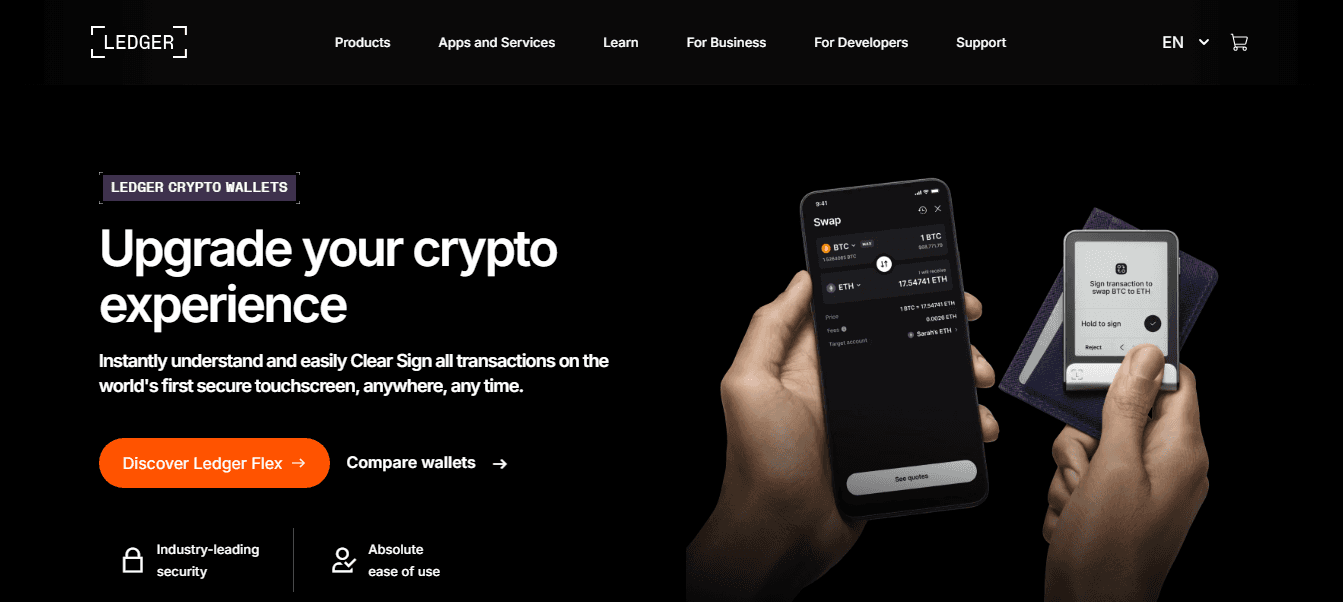
Ledger.com/start – A Practical Guide for New and Growing Crypto Users
Over the past few years, cryptocurrency has grown from a niche technology into a mainstream financial movement. Millions of people now buy, trade, and hold digital assets—yet many still depend entirely on centralized platforms to keep their funds safe. While exchanges may feel convenient, true ownership of crypto only exists when you control your private keys. This is where ledger.com/start becomes important for anyone serious about long-term crypto security.
Ledger.com/start is the official onboarding portal for Ledger hardware wallets. Instead of leaving users to figure out complicated setup steps on their own, this page provides step-by-step instructions for preparing your device safely and correctly. Whether you are brand new to crypto or already comfortable using exchanges and mobile wallets, learning through ledger.com/start gives you the foundation to move into true self-custody.
Understanding Why Crypto Security Matters
Before diving into the practical use of ledger.com/start, it is important to understand the basic problem it solves.
Cryptocurrency does not work like traditional banking. There is no help desk to reset your account or recover your funds if something goes wrong. Ownership is defined by possession of cryptographic keys. If you lose the keys, you lose access to your assets forever. If criminals steal your keys, they become the new owners.
When crypto stays on an exchange, you are trusting that exchange to protect your keys on your behalf. This trust creates a vulnerability. History has shown that even major exchanges can be hacked, restricted by regulators, or shut down unexpectedly. When these events occur, users often face frozen funds or total losses.
Self-custody removes this risk by transferring full control to the user. Your keys are generated and stored by you alone. This approach eliminates dependency on any platform and ensures your crypto remains yours regardless of what happens to exchanges or online services.
What Is a Hardware Wallet?
A hardware wallet is a small physical device designed to store private keys offline. Unlike mobile or desktop software wallets that remain connected to the internet, a hardware wallet signs transactions internally and never exposes private keys to online systems.
Ledger wallets contain secure chips similar to those used in credit cards and passports. These chips isolate private keys even when the wallet is connected to a computer or phone.
Ledger.com/start educates new wallet owners on how these devices function. You learn that while Ledger Live displays balances and broadcasts transactions, the actual authorization happens only on the wallet itself. Every outgoing transaction requires physical button confirmation.
This combination of offline key storage and manual verification is what makes hardware wallets one of the most secure solutions for self-custody.
What Happens at Ledger.com/start?
Ledger.com/start serves as an onboarding hub for configuring your new hardware wallet properly. The setup is carefully structured so that users do not skip crucial safety steps.
The process begins by guiding you to install Ledger Live—the official companion application. Ledger Live becomes the interface through which you manage crypto accounts, track balances, and prepare transactions.
After connecting your wallet to your device, the onboarding instructions walk you through choosing whether to create a new wallet or recover an existing one.
Creating a New Wallet
For brand-new users, creating a new wallet is the most common option. The device generates a recovery phrase, usually consisting of 24 randomly chosen words. This phrase is the master key to your wallet.
The phrase never appears on your computer screen. It shows directly on the hardware wallet, ensuring offline creation.
Ledger.com/start emphasizes that you must write this phrase down carefully on paper and store it securely. Anyone with access to the phrase can fully control your funds. Losing it means permanently losing access to your assets.
Next, the wallet asks you to confirm specific words to verify you recorded the phrase correctly.
Choosing and Using a PIN Code
During setup, users create a PIN code that locks the wallet each time it is powered on. The PIN protects the device if it is lost or stolen. Without the correct PIN, access to the wallet remains blocked after several failed attempts as the device resets itself.
Ledger.com/start emphasizes that the PIN does not replace the recovery phrase—it complements it. The phrase protects against extreme loss scenarios while the PIN prevents casual physical access.
Installing Crypto Apps
Unlike simple wallets that support one blockchain only, Ledger devices use small apps dedicated to each network.
For example:
Bitcoin transactions require the Bitcoin app.
Ethereum transactions require the Ethereum app.
Other tokens operate through their respective apps.
Ledger Live installs these apps directly onto your device. Ledger.com/start guides you through this process and explains that the apps do not hold funds—they merely allow interactions with each blockchain.
Users can install and remove apps freely depending on available storage space without affecting account balances.
Everyday Use of a Ledger Wallet
Once your wallet is configured using ledger.com/start, the daily workflow becomes intuitive.
Receiving Crypto
To receive funds, you open Ledger Live, select your desired asset, and generate a wallet address. Before sharing that address, the device asks you to confirm the address on its screen. This protects users from address-manipulation malware that can alter copy–paste data.
Once the transaction is confirmed on the blockchain, your balance updates automatically.
Sending Crypto
To send funds, you prepare a transaction in Ledger Live, then confirm the destination address and amount on the wallet screen. Only after you physically approve the transaction does the wallet sign it.
This manual approval requirement prevents unauthorized transfers even if your computer or phone has malware.
Transitioning from Beginner to Confident User
Using ledger.com/start often represents a transition from casual crypto ownership to confident asset management.
At first, beginners learn fundamentals:
How blockchains verify transactions
Why private keys must remain secret
How recovery phrases protect wallets
After some experience, topics grow deeper:
Managing multiple accounts for different purposes
Using passphrases for enhanced protection
Integrating with decentralized apps
Storing NFTs securely
Ledger.com/start does more than guide setup—it introduces ethical security habits. It encourages deliberate verification, offline backups, and skepticism toward unsolicited online messages.
The Psychology of Safe Crypto Ownership
Crypto security isn’t just technical—it’s behavioral. Many losses result not from hardware failures but from emotional decision-making and rushed actions.
Ledger.com/start emphasizes slowing down:
Read instructions carefully during setup.
Never rush when confirming addresses.
Never respond to fear-based messages demanding immediate action.
This calm approach protects users from impulsive decisions driven by scams.
Over time, these habits become second nature. Experienced users recognize suspicious messages instantly and treat their recovery phrases with the same seriousness as they would large sums of physical cash or legal documents.
Avoiding Common Setup and Security Errors
Beginners frequently repeat a few common mistakes that compromise safety.
One error is storing recovery phrases digitally. Cloud notes and photographs expose your phrase to hacking risks. Paper or engraved metal backups remain the safest options.
Another mistake is entering the recovery phrase into online forms claiming to fix wallet issues. Legitimate support never asks for it. Ledger.com/start repeats this warning consistently for good reason.
Skipping firmware updates is another risk. Updates improve compatibility and fix vulnerabilities. Keeping firmware current enhances long-term security.
Ignoring transaction address verification is also common. Always ensure addresses on your wallet screen match what appears on Ledger Live before approval.
Why People Choose Ledger Over Other Solutions
Users gravitate toward Ledger devices and ledger.com/start because of reliability, simplicity, and trust built over years of community usage.
Ledger wallets offer:
Offline key storage
Verified transaction confirmation
Support for thousands of coins and tokens
Cross-platform compatibility
Regular software and firmware updates
Ledger.com/start integrates these strengths into an accessible setup environment that does not overwhelm first-time users.
Self-Custody as a Long-Term Skill
Learning self-custody through ledger.com/start is not just about using one device—it is about developing a lifelong skill.
True crypto ownership means:
Trusting your own processes rather than platforms
Understanding how blockchains verify transactions
Developing disciplined backup habits
Staying alert against evolving scam tactics
As assets grow or portfolios diversify, the value of these habits multiplies.
Frequently Asked Questions
What exactly is ledger.com/start?
Ledger.com/start is the official onboarding portal for new Ledger wallet owners. It guides secure device setup, recovery phrase creation, and Ledger Live installation.
Is Ledger Live safe to use?
Yes. Ledger Live is a wallet interface—not a custody service. Your private keys stay securely inside your hardware device at all times.
Can I restore my wallet if my Ledger is lost?
Yes. If you still have your recovery phrase, your wallet can be restored on any compatible hardware wallet.
What if someone sees my recovery phrase?
Anyone with the phrase has full access to your funds. Transfer funds immediately to a new wallet with a new phrase if exposure occurs.
Does ledger.com/start ever request recovery phrases online?
No. Ledger and its official tools will never ask you to enter your recovery phrase on a website, form, or support chat.